Return to Community Capitalism - Part 1
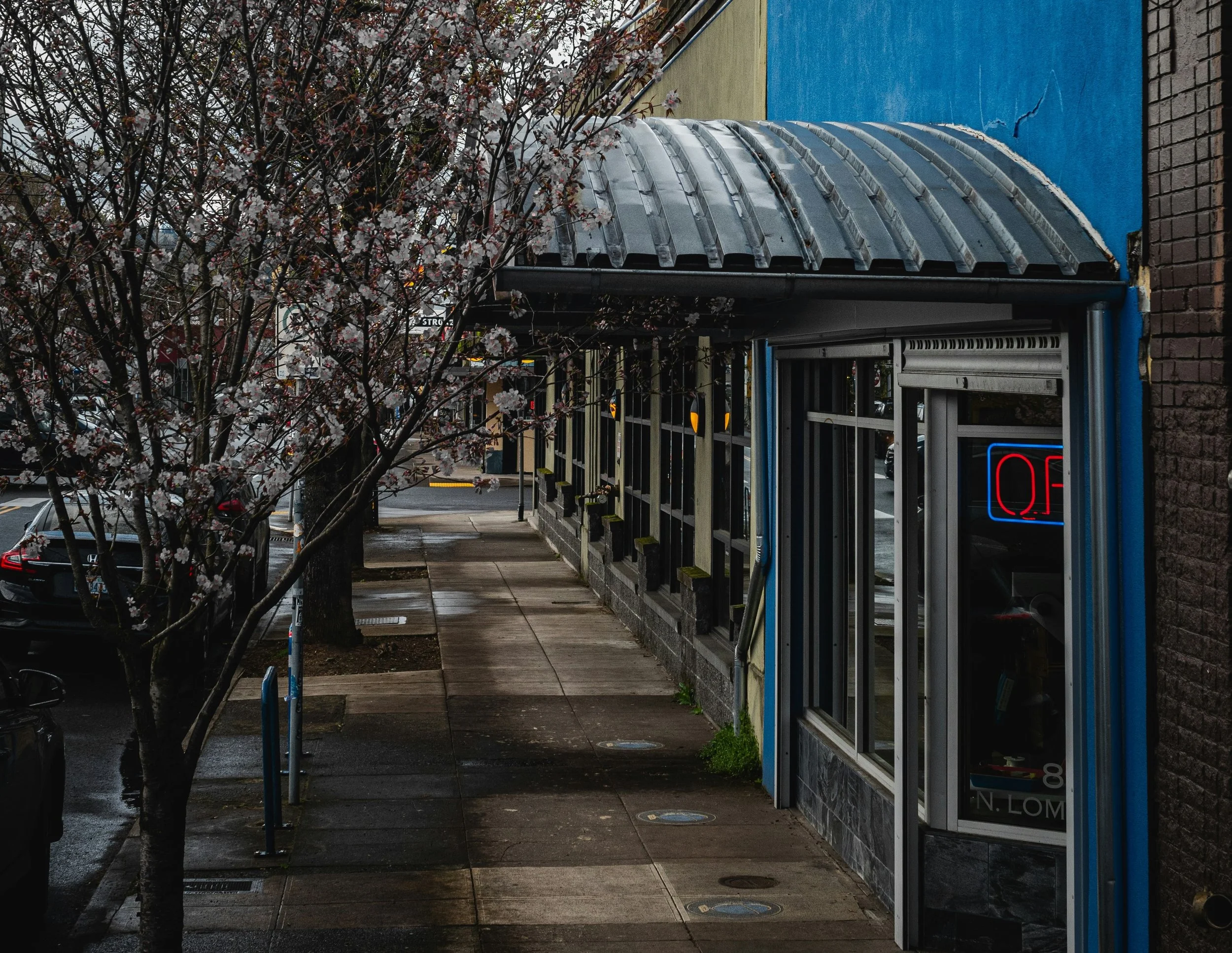
Photo by Jon Lanzieri
This is the first in a series of three articles about the need to develop public policies based on community capitalism. In this article I will lay out the problem, as I see it, in the second article, lay out an alternative set of short term public policy priorities and in the third article, I will propose a vision for longer term change.
Six months ago, when I launched this writing space, my opening article was a reflection of my childhood that instilled in me the seeds of change that has guided the trajectory of my career. In that opening article, I stated,
Decades later, we are still in need of a new approach to community development. An approach grounded in systems rather than silos and focused on rebuilding at the local economic level. Like the town of my childhood, there are too many local economies that are metaphorically hollowed out factories that remain empty. Community leaders face a choice, let industrial decay (literal or figurative) become a photojournalism project or invest in designing and implementing hyperlocal strategies that concurrently build connections between people, recapture local economies, and expand civic pride.
In this context, it is with dismay that I think Portland has achieved the trifecta of three engineered crises. The first crisis is the city being held hostage by a predatory billionaire who is extracting hundreds of millions of taxpayer dollars to ensure an NBA team remains in Portland. The second crisis is the persistent beating of the economic doom cycle drum by the Portland Metro Chamber to justify making business “easier” for large corporations. The third engineered crisis is the pedestrian imagination and public policies of the Portland city council, who are willing to be led by the nose by the monied interests –in spite of having a block of councilors self-identifying as democratic socialists.
Let’s start with the obvious manufactured crisis, which is the hostage crisis of a billionaire demanding that extensive renovations be made to the Moda Center at taxpayer’s expense. Let’s set aside the well documented fact that the billionaire owner of the sports team made his money building the nation’s biggest predatory subprime auto lending empire. (1). The current arguments made for the City and County using more than $600 million of taxpayer revenues to fund the renovation are threefold.
The first argument is that the arena is an infrastructure project because it is an asset owned by the city. Technically this is true, but when the “asset” was purchased in 2024 for $1 and immediately needed $600 million in repairs, then the city did not buy an asset. What it really did was to transfer a $600 million liability from the balance sheet of the billionaire owner of the Trailblazers to the city’s balance sheet as tax payer supported liability line item (2).
Okay, if that argument fails, the second argument is that the economics of this deal are in our favor. Unfortunately, when think tanks as politically diverse as the conservative CATO Institute (3) and the liberal Brookings Institute (4) agree that public subsidies of sports arenas are a losing proposition, the economic rationale collapses. In fact, the most blunt criticism comes from the CATO Institute, that concludes, “the harsh reality for even the biggest sports fan is that arena subsidies are a terrible use of finite government resources and a ridiculously egregious redistribution of wealth from regular Americans—fans and haters alike—to some of the wealthiest people and organizations on the planet.
We are then left with the third argument that is used to spin this story of subsidizing a sports team to the tune of $600 million. We are told that sports teams are at the heart of civic pride. Wait, really? In 2023, the Pew Research Center released survey results that found that the majority of Americans (62%) say they don’t follow professional sports and say they talk about sports with other people a few times a month or less often (5). In other words, for nearly two-thirds of folks, sports is not the primary source of civic pride.
At its core the current debate over spending taxpayer dollars to renovate the Moda Center is driven by the continued misguided belief that trickledown economics works. It is as if local and state leaders are channeling Margaret Thatcher and Ronald Reagan who emphatically believed that “there is no alternative (TINA). This language is inconceivable to hear from a city council where a quarter of the councilors profess to be Democratic Socialists; in a County that also portrays itself as liberal; in a state that believes itself to be a bullet proof left leaning Democrat stronghold with a firm grip on progressive public policies. Yet here we are and the train has left the station. It is magical thinking to think that predatory corporations who have proven over and over their willingness to extract capital from our community, will somehow reward our investments. It is time we stop being driven by the stranglehold of corporate fear.
Okay, so I have spent a lot of time deconstructing the Moda center renovation “crisis” because it is a great case study that is emblematic of the economic doom cycle fear mongering by the Portland Metro Chamber (6). Using data to drive a “there is no alternative” agenda, we are forced to believe that improving our economy is only obtainable by subsidizing corporations, shifting social and infrastructure burden from corporations to taxpayers, and reducing corporate regulatory and tax barriers. In other words, the local equivalent of Reaganomics at its finest.
This brings us to the crisis of political ignorance (or willingness to ignore) how the current set of proposed solutions offered by the Portland City Council are effective for short-term political gains but have been shown over and over again to undermine the economic resiliency of our community.
It is time that we begin to create a different vision of tomorrow. If we are going to develop a resilient local economy, it is time that we abandon public policies that reward extractive capitalism and begin to weave together the innovative local policies and strategies that support community capitalism and through the weight of political will, change the trajectory of our community.
Stay tuned for part two.
References
(1) Schick, T., & Wilson, C. (2025, October 3). Before Tom Dundon Agreed to Buy the Portland Trail Blazers, Oregon Accused the Company He Created of Predatory Lending. ProPublica and Oregon Public Broadcasting.
(2) Jaquiss, N. (2026, February 18). In arena funding talks, Oregon officials are playing not to lose. Oregon Journalism Project.
(3) Lincicome, S. ( 2024. May 15). Sports Are Great, but Stadium Subsidies Stink. CATO Institute.
(4) Zimbalist, A., & Noll, RG. (1997, June 1). Sports, Jobs, & Taxes: Are New Stadiums Worth the Cost? Brookings Institute.
(5) Hatfield, J., & Van Freen, T. (2023, October 17). Most Americans don’t closely follow professional or college sports. Pew Research Center.
(6) Portland Metro Chamber (2026 February) 2026 State of the Economy.
I have over 30 years of experience in community development and helping organizations weave social fabric and improve communities. In roles as diverse as a nonprofit executive director, interim director and a consultant, I helped dozens of organizations in the Portland Metro area to run effective meetings, assess community needs, design programs, create effective boards, develop strategic plans, and strengthen programs that serve the community
