Zombie Malls or a Local Economy
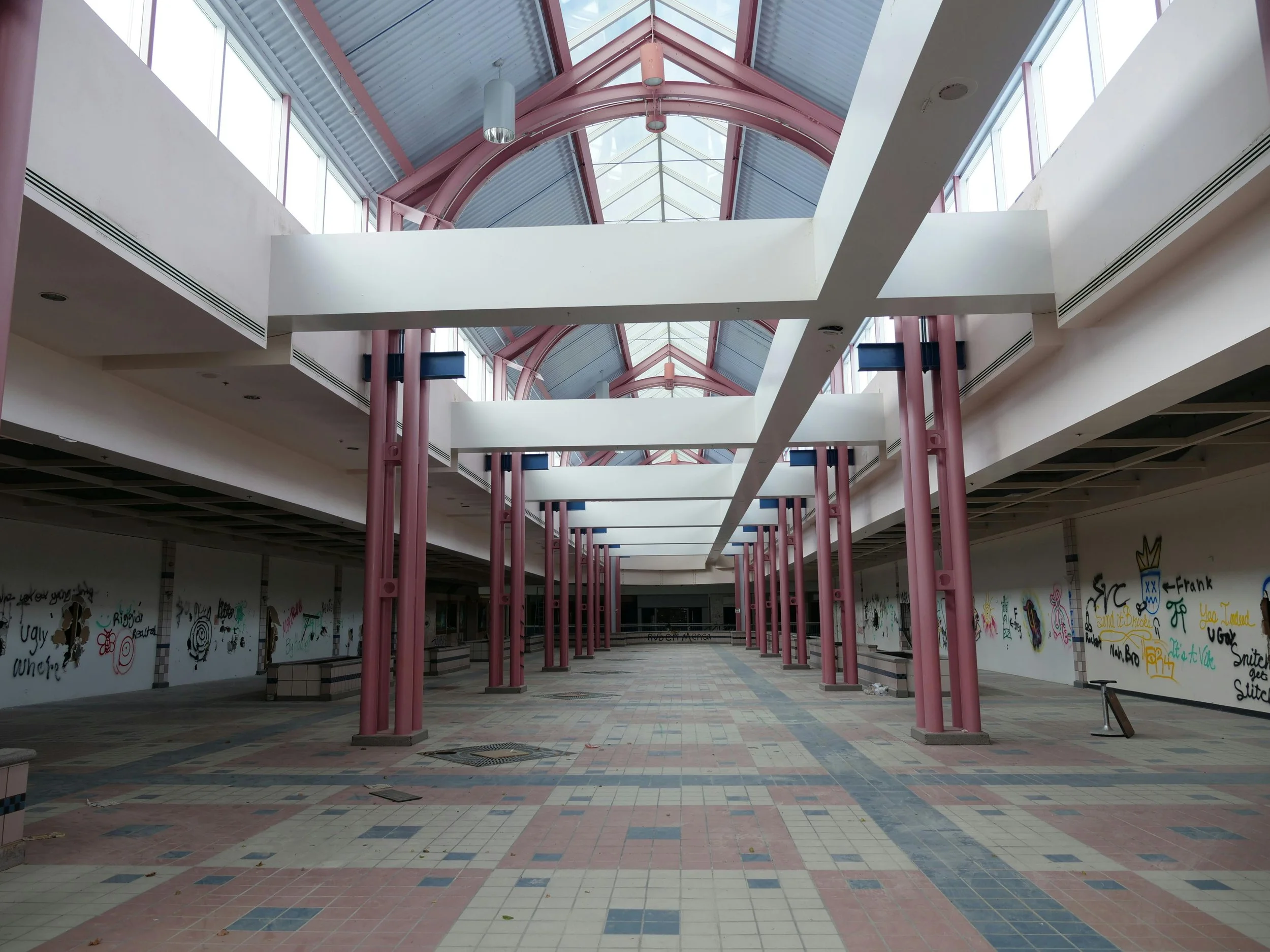
I grew up in a rural community at the dawn of the indoor shopping mall movement of the 1960s and 1970s. Shopping malls promised convenient shopping under one roof with the scale of chain stores offering the promise of lower pricing. Indoor shopping malls, and to some extent, strip malls, were particularly destructive to small towns and local main streets. The three effects of shopping malls included: 1) crushing the market share of main street by diverting consumers to the convenience of a mall experience, 2) destroying the local tax base (multiplying empty buildings), and 3) displacing the traditional “third spaces” that promote diversity, inclusion, and social cohesion. Ironic that decades later, technology-mediated shopping and discount big box retailers, in turn, decimated the American shopping mall. The alpha predator of the shopping mall was eaten by an even more invasive predator, online shopping. So, here we are with many shopping malls now sitting vacant (or near vacant) as a new reminder of the consequences of decisions made years ago (2).
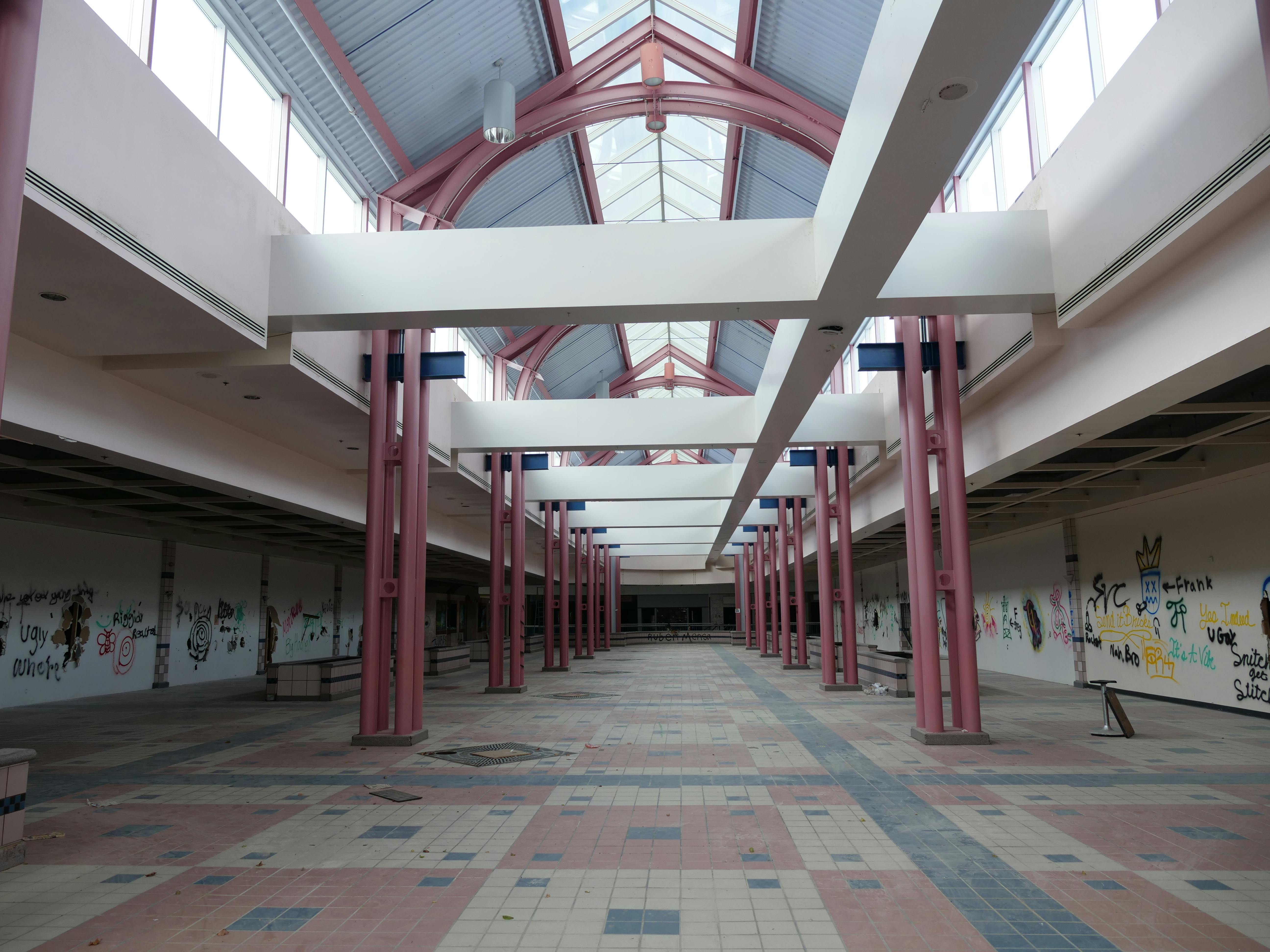
In Portland, Oregon two zombie malls blight our community. The outdoor Gateway Shopping center, on the edge of east Portland was abandoned by its anchor tenants, and Lloyd Center, one of Portland’s two enclosed urban shopping malls suffered the same fate. Six months ago, I wrote about Gateway shopping Center (3) and since the initial bravado of politicians, the buildings continue as a boarded up reminder of a difficult commercial economy. Conversely, the Lloyd Center owners have decided to demolish the buildings and to turn much of the 25-acre area into a neighborhood featuring park space, walking paths, new homes and offices. Yet rather than celebrating that a developer is seeking to add housing, public spaces and commerce to our dense urban core, groups seeking to “Save the Lloyd Center” have filed appeals.
The rationale for trying to save Lloyd Center is two-fold. First, the iconic indoor skating rink has been romanticized over the years. I get it. I have fond memories of my daughter taking lessons there and skating with my kids. But Portlanders need to go back to the beginning. Lloyd Center concentrated retail under one roof and stripped the 50 business districts of our city of vital locally owned neighborhood retail shops. That is the legacy of the mall. In the beginning the ice rink was a marketing tool to draw people from neighborhoods into a for profit playground. At the end of the day, the ice rink is a privately owned business and the owners are responsible for their decisions to continue the enterprise in another location.
The second rationale for saving the mall is the untenable premise that the mall is currently offering low-rent storefronts that wishfully would pencil out economically as a maker-to-market space. It obviously does not pencil out and is why the mall is being torn down. But even if the Lloyd Center maker space concept were viable, it would still continue to concentrate economic development and retail in one location.
In a city with fifty business districts, we need a very different vision of economic development. We need an economic development approach that fosters micro and small-scale manufacturers, retail, restaurants, cafes and other local businesses distributed across our neighborhoods (5). In our city council model of district representation, councilors should know their district businesses and be fighting for more micro and small business support across the city. This is what equity would look like and this is what a circular economy looks like. This is the district advocacy that was in the DNA of the charter reform approved just a couple of years ago.
Public policy should be driven myopically by the question: How do we strengthen diverse neighborhood business districts that network together to create a strong and vibrant local economy? Unfortunately, the reality is that in the last year, the city of Portland has passed only token small business proposals so that councilors can claim accomplishments in this re-election season. However, the overall small business strategy and architecture of our district level development efforts are fragmented and marginally funded. Further, for those suggesting that we should interfere with the Lloyd Center demolition plans, it is emblematic of the public policies that concentrate and extract wealth, grow economic disparities, split the social fabric of our neighborhoods, and weakens sustainable local job growth.
Let me end where I began. In this article I am using indoor malls, and the feeble attempt to “Save Lloyd Center" as a metaphor. My point is this, Portland faces a choice of pursuing, as an economic development strategy based on the “mallification” of our city, that concentrates our economic opportunities in the narrow inner core of the city, or building a local economy that works for all of us. It is time for an economic approach that is true to our diverse neighborhoods across all four districts.
This November, Portland has a local election that could potentially replace half of the city council and the merits of the new city council will be based on an approach to economic development. Do we adopt a citywide strategy based on district economies or do we continue on the path of the “mallification” of Portland, concentrating wealth and opportunity. It is time to echo an author on the website Failed Architecture, who wrote, “We’d better get a grip on the phenomenon of mallification of our cities, lest we become the zombie mall dwellers from Dawn of the Dead: trapped in a sanitized environment with all life sucked out of it, in an urban environment that has become no more than a spectre of its past self. (6)”
~Mark
References
(1) Glennen, C. (ND) The rise and fall of the US mall. World Finance Blog
(2) Plante SG. (October 2019) The Rise of the Zombie Mall. Smithsonian Magazine
(3) Fulop, M. (October 15, 2025). Where there is no Vision
(4) Buckley K. & Karabaic, L. (April 16, 2026) Portland’s Lloyd Center to permanently close on Aug. 8 ahead of demolition . Oregon Public Broadcasting.
(5) Preuss, I. (2021) Recast Your City: How to Save Your Downtown with Small-Scale Manufacturing. Island Press. Recast Your City website
(6) Martens, J. (Janaury 23, 2018 ) Mallification: The Vengeful Return of the Mall in the 21st Century. Failed Architecture.
have spent my career building connections and supporting collaborative work. I was fortunate enough to be introduced to systems thinking as part of my graduate work in public health and have used community development skills in virtually every position I have held. If you need a meeting facilitator, trainer or someone to help design a process, the reach out and connect.