
Nonprofit Strategic Planning or Navigation Planning
A strategic plan tells the story of how you create change and why it is important (visually represented in a logic model or theory of change), and maps out a strategy to track progress. When that plan is interrupted by a short term challenge or crisis, a navigation plan is the equivalent of the GPS in your car rerouting you around an accident or other road delay. Once that obstacle is navigated the GPS put you back in track towards your destination.

Collaboration and Nonprofit Developmental Stages
We must face the reality that we are at the front end of a fundamental reordering of the nonprofit sector and, as a nonprofit, you can be dragged along because of agency and leadership hubris or you can control your place in the reordering.

Five Nonprofit Conversations Needed Now
If your nonprofit has a weak theory of change, with outcomes supported by little data, you are struggling to create revenues and a board capable of leadership, and your current strategy feels like it is one step forward and one (or more) steps backwards, it is time for nonprofit leadership and board members engage in five critical conversations now.

Critical collaboration: Not all nonprofits will survive
If you are cutting programs, staff, or infrastructure, you certainly can’t add “new” revenue generating strategies. Cutting programs won’t rescue you either. It’s time to think differently about your organization’s future. Whatever your issue area is you are not alone. Other are working on the same issues and, because you are not alone, the conversations must shift.
Facilitating when there is more at stake
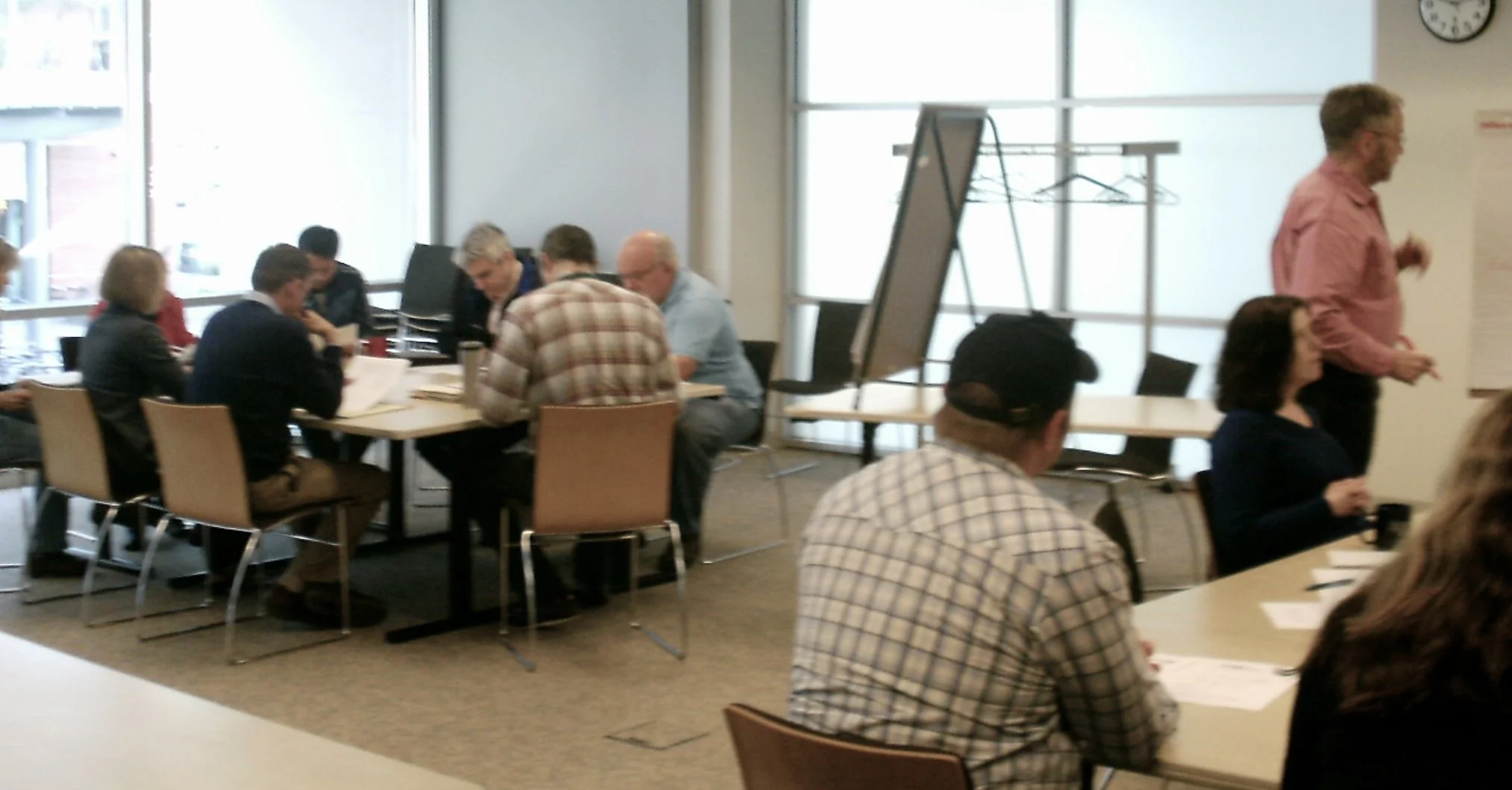
When the meeting stakes are high, trust or social parity between members is low, and/or process skills are weak the need for an outside facilitator increases. Unfortunately, the idea of paying for facilitation clouds the judgement of teams to self assess their objectivity, equity, and process skills. As a result applying routine “we can do it ourselves” facilitation skills to high stakes meetings, at best, cheats the process, and at the extreme, results in bad decisions.
The critical need for community collaboration
I was recently reading an article on social solidarity, human rights, and collective action and was reminded that any big change requires rebuilding trust, developed by establishing platforms for citizen participation. Collaboration rather and individualism must be the platform for change. Imagine. Imagine rediscovering the vitality and potential of the community. Imagine, creating the time to learn, plan and engage in collaboration with a renewed sense of urgency. Imagine if we build more porches to connect us and fewer fences to divide us.